Courtesy of Alzheimer’s Disease International
By Eliza Marie Somers
Research indicates brain injury survivors have a higher percentage rate of developing dementia and/or Alzheimer’s disease than people who have not suffered a TBI. However, there are numerous strategies, which easily can be incorporated into daily life, that can stem or stall debilitating brain diseases.
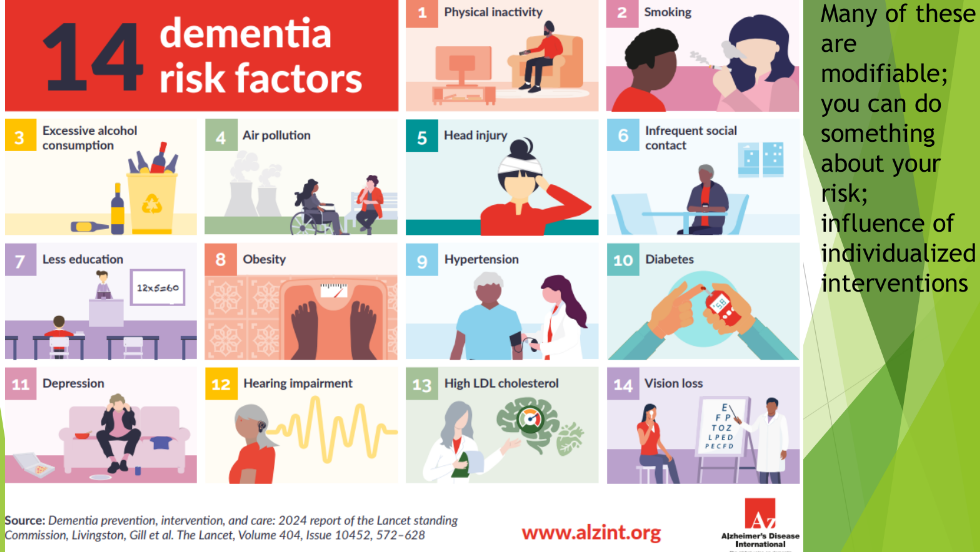
During the Brain Injury Hope Foundation’s Sept. 11, 2026, Survivors Series: The Aging Brain and the Long Effects of Brain Injury, researcher Judy Gargaro pointed to 14 risk factors, which include a TBI, that can harm the brain. However, she emphasized a “positive flip side” in that all of these factors can be revised or modified to dampen the effects on the brain.
14 Dementia Risk Factors
- Physical inactivity
- Smoking
- Excessive alcohol consumption
- Air pollution
- Head injury
- Infrequent social contact
- Less education
- Obesity
- Hypertension
- Diabetes
- Depression
- Hearing impairment
- Untreated vision loss
- Elevated LDL levels
- Here’s the link to download the infographic on 14 Dementia Risk Factors
“There's a lot of ways that we can modify our risks,” Gargaro said while using physical inactively and smoking as examples. “Many of us, as we age, it is natural to become a little bit more inactive, and this is something that we can work on. … Smoking, obviously for those folks who smoke, nicotine is one of the most addictive substances, believe it or not. It's a hard habit to break. So, this can be really daunting to think about having to quit smoking. So, we all say, just start taking some steps in reduction. So, reducing smoking is already a step in the right direction.”
Other modifications that can be implemented include reducing alcohol intake, using an air filter to mitigate air pollution, taking a class or volunteering to fight isolation, wearing hearing aids and eyeglasses, and exercising – even if it’s just starting small, such as walking around the house. Exercise also can help to battle obesity, hypertension (high blood pressure), depression, high LDL cholesterol and diabetes.
A head injury might be the hardest risk factor to tackle, however Gargaro said there are things a person can do to minimize the risk of having another TBI.
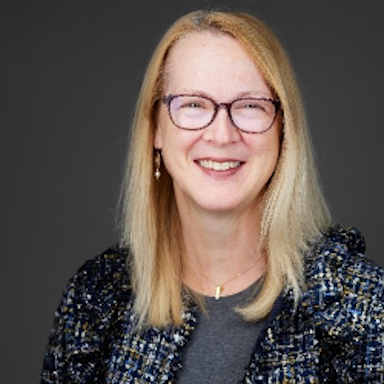
Brain injury researcher Judy Gargaro says there are numerous things people can do to reduce the risk of dementia.
“Obviously, head injury, once you've had a head injury, you can't make it so that you've never had one, but there's quite a few things that you can do to modify your risk of getting another head injury,” Gargaro explained. “You want to do things like making sure you're strong on your feet, you've got good balance. And that you're not engaging in other activities to get another head injury.”
The Brain Injury Association of America notes that there has been no evidence found that a single, so-called “mild” TBI increases dementia risk. However,
-
- One study found that individuals who had a moderate traumatic brain injury had a 2.3 times increased risk of developing Alzheimer’s, while those who sustained a severe traumatic brain injury were at a 4.5 times greater risk.
- Individuals who have sustained multiple TBIs have a higher risk of developing Alzheimer’s.
Dr. Mary Ann Keatley, a co-founder of the Brain Injury Hope Foundation, pointed to the brain’s ability to rewire itself, aka neuroplasticity, as a key to recovery and stemming the onset of dementia.
“After working in rehab for a lot of years … in the beginning, the physicians didn't really believe in neuroplasticity. They just thought that once you had a problem, and if you made it to three months, then that was as well as you were going to get. Well, that changed dramatically over time. And treating patients, you could see it -- they improved and improved.”
Along with the brain’s ability to rewire itself, Keatley said the brain produces a protein called brain derived neurotropic factor (BDNF), which helps promote the survival and growth of new neurons. And there are some easy ways to increase BDNF, such exercising, especially high-intensity workouts, eating a diet rich in omega-3s (fatty fish, walnuts, flaxseed) and green vegetables, increasing exposure to sunlight, getting high-quality sleep, and increasing cognitive stimulation.
Don’t let the term high-intensity workout keep you from trying this form of exercise. It can be as simple as walking fast for 1 minute, then walking at a slower pace for a brief period, then walking fast for another minute.
Another way to increase BDNF is to manage stress via meditation, yoga and spending time in nature or as Keatley calls it – spiritual fitness. She especially likes the Kirtan Kriya meditation for its ability to calm while also increasing blood flow to the brain and most important the meditation’s effect of the body’s telomeres.
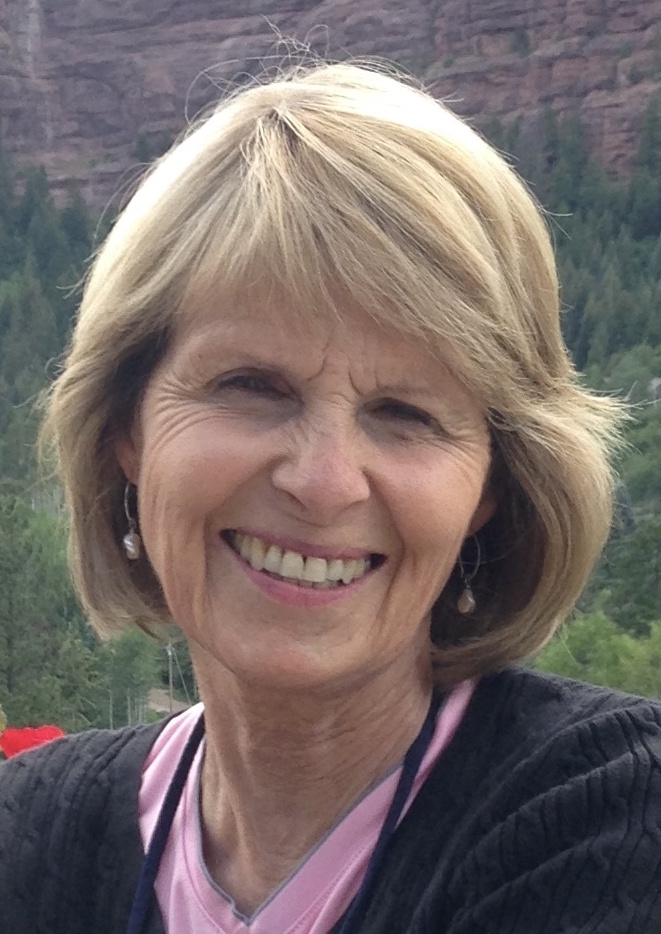
BIHF co-founder Dr. Mary Ann Keatley points to “spiritual fitness” as a way to increase the brain protein BDNF by incorporating meditation, yoga and time in nature into your daily activities.
“The key point here is that it actually affects your telomeres. And I thought, OK, well, what are telomeres exactly? Telomeres are the ends of your chromosomes. And as we age your DNA and your chromosomes actually have a tendency to shorten. But the telomeres on top of them help you keep from aging rapidly. …, Think about your shoelaces, and that little plastic end where you put it through the eyelet on your shoe. That is like what the telomere is. It protects that chromosome. Telomeres keep the DNA from unraveling.”
Cognitive stimulation is a great way to keep your brain active along with stemming memory disorders. Keatley referenced a study by Posit Science, which is now Brain HQ, that had participants do six auditory exercises for a total of 40 hours over time. “And what it showed was pretty phenomenal. Memory improved by 10 years. And speed of processing improved by 131%,” Keatley said.
The exercises are a visual, speed program that may be too intense for some people, but there are alternatives, she said. For more on brain exercises see this article by Medical News Today
Some Brain Exercise Programs
Another way to improve cognition is to simply switch things up. Instead of brushing your teeth with your right hand, use your left hand. Just by doing everyday tasks with the other hand is a great way to stimulate the different hemispheres of the brain and different parts of the body. This type of work helps with flexibility of thinking.
Keatley likes to use this method after her walks by saying A1, B2, C3, D4, E5 and so on. “You're shifting hemisphere to hemisphere by doing a letter and a number --A1 B2 C3 D4 -- because most people can do the alphabet fairly easily,” she said.
“You can stimulate the brain by doing rhythm. Reciprocation and repetition. So, like going out and walking and doing one and two and three and four, one and two and three and four. And you could do days of the week, months of the year. And reciprocation is moving opposite sides of the body. And repetition is any activity that you do over and over, obviously.”
To help with language and word retrieval try writing as many words as you can starting with one letter in 60 seconds. The goal is to get to 12-18 words in one minute. Another method is object naming by naming as many objects in your the visual field.
Free SAGE Test
Maryann Keatley and Judy Gargaro stress the SAGE test is a SCREENING and not a diagnosis. They encourage people to talk with their doctors about the findings.
One thing to keep in mind when doing cognitive exercises is to be aware your energy reserves.
“As far as cognitive fatigue goes, most people that have experienced a brain injury really understand the mental fatigue that goes with it -- 43 to 73% of people with brain injuries complain of cognitive and mental fatigue,” Keatley explained. “And sometimes it can go on for years. Some people think it's related from trying to process information. I personally think there's more of a physiological basis to it, but it does affect the quality of life, and, you know, it can be related to mental effort. There's actually a word for that called conation. People will start a task, but they can't complete it because the brain becomes mentally fatigued if it's a complex task.”
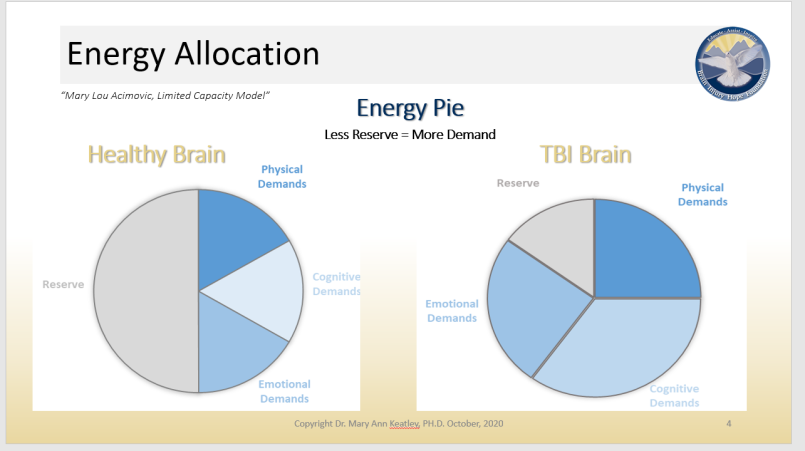
The Energy Pie is a great way to explain cognitive fatigue. A person with a healthy brain may have two-thirds to half a pie of energy available at the end of the day, and a brain injury survivor may have only an eighth of the energy pie left at the end of the day.
Ageism and Falls
Gargaro, who has more than 35 years working in the brain injury field, noticed that ageism is rampant in the healthcare networks, especially after a fall.
“Most people when I ask them what they think the most common cause of brain injury is at all ages, they usually get this question wrong. The answer is a fall, and it's particularly prominent once you get in those nether regions of over 50,” Gargaro explained.
“Falls really become the strong cause of brain injury, and once you've had one fall, you're actually at a higher risk of having other falls, and so this is really important to address.
“It's easy for people to dismiss a fall whether it’s yourself or a family member, your family physician. It's easy for people to dismiss that falls might be a significant cause of brain injury, but it's really important to be more respectful of falls.
“And just thinking about an older person,” Gargaro continued. “If an older person falls, and let's say breaks a hip or an arm or a leg, the focus when you get healthcare is going to be on that musculoskeletal injury, and they may not screen for concussion. They may not think about the possibility that you may have had a concussion. And if they see that you have some cognitive symptoms, they can dismiss it and say, ‘Well, they're just an older person. That's just natural aging.’ And again, we have to push against this, because it's very likely a concussion.
“So, when I work with healthcare providers, I say, ‘Don't assume. Ask if the person's confusion that they're experiencing is new.’ … Not treating older adults properly and not understanding the experience of brain injury and just having them fend for themselves, they're more likely to show up in an emergency department.
“So, it's harder for people to get the care they need, because again, there's not really a respect for the fact that a fall can be a significant cause of brain injury, so it's important to really advocate and push for that.”
Gargaro stressed the need for fall prevention programs, and brain injury survivors really need to work on their balance, especially in areas where winter brings ice, snow and freezing rain.
“You need to be able to know how to manage safely on ice,” Gargaro said. “There's a website called Rate My Treads. https://kite-uhn.com/rmt/en And you can go on there, and you can put your footwear there, and it will tell you how your footwear is rated for preventing slipping and falling.”
During her research Gargaro found that ageism seeps into the rehabilitation process, whereas younger patients get better access to rehab therapy than older TBI survivors.
“The way ageism plays out is, ‘Well, that person is retired. They're not working. They're not going back to work. It's not necessary to rehabilitate them to get them back into productive activity.’ …
“So, it's very easy to dismiss that older people might need to get a course of rehab. We have data that shows that when older people get access to rehab, they live longer, and they use less preventable healthcare. So, there's an economic reason to do this as well,” Gargaro explained. “Older folks need to have the access to the same care as a younger person. Age should not be the limiting factor, or the deciding factor, whether someone gets care.”
During rehabilitation it’s important to not take it past your threshold because it then becomes counterproductive.
“One of the primary rules of rehabilitation is -- do not push yourself beyond your physiological limit,” Keatley said “As your brain is recovering, pay attention to what's your limit. And if you're getting fatigued, you have to stop and rest. And one of the rules is to do a little bit, rest a little bit, do a little bit, rest a little bit.
“Just to add to that point,” Gargaro said. “One of the things that we look at is when you do something, and you're feeling that you've just spent your reserve, and you're really exhausted. We also look at how quickly it takes you to recover because that gives you an idea of, ‘Wow, did I push it a little bit or did I push it a lot?’
“If it takes you an hour to feel refreshed, then you can just change whatever activity you're doing by a little bit. But if it's really something that knocks you out and ruins you for the rest of the day, then that's like, ‘Wow, I really need to not do that particular thing with that intensity.’ You need to pay attention to how you're responding to the activity, but also what your recovery time is.”
One method to help with recovery is using hyperbaric oxygen therapy (HBOT), in which a client is in a chamber and receives 99% pure oxygen. Studies reveal that at one month post HBOT therapy language improved, abstract reasoning and memory functioning improved. Keatley noted that HBOT is expensive, however, there are programs for veterans that help pay for costs, and units can be rented for one month or more.
- For more information on HBOT for veterans, visit https://rockymountainhyperbaricassociation.org/healing-our-heroes/
- The association also may be able to help non-veterans find HBOT.
Avoiding Scams
Brain injury survivors need to be aware of the sophisticated methods scammers are using to gain access to people’s money, bank accounts and credit cards. With artificial intelligence readily available scams are now coming in many forms – even generating voices that may sound like a relative.
Gargaro has a few tips to avoid being taken to the cleaners.
- Hang up if you are being pressured
- Never buy gifts card if someone asks you to
- Don’t click unsolicited links for virus protection, unpaid invoices
- Never give your password or PIN
- Be careful of fake calls from “family members”
- Ignore unknown contacts and phone numbers
Be wary if a person is:
- Being pushy to be your romantic partner
- Asking questions about how much money you have
- Offering to help you with your will
- Pretending to be homeless so they can stay with you
- Offering get rich quick schemes or guaranteed investments
- ALWAYS STOP AND THINK. IF IN DOUBT HANG UP/DISCONNECT
You Can Heal Your Brain
Rehabbing from a brain injury can be a lifelong task, but it doesn’t have to be daunting. Make rehab fun. Find a craft you enjoy and do it. Sign up for a class or volunteer. Take a walk in nature.
Moderator Joanne Cohen encouraged survivors to start with one thing to improve brain health, and once comfortable add another component. “It can be overwhelming because there are so many things we can do to be healthy,” she said. “I started with Weight Watchers, got comfortable with that, then I was doing the swimming, then I added the walking. You know, I did things, I paced myself to put together the whole package of what I'm able to do now.”
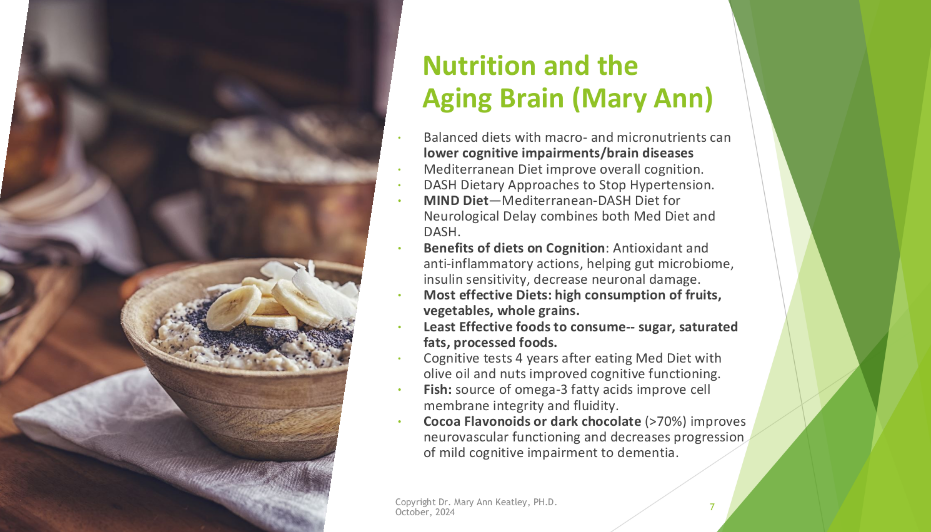
Eating a healthy diet is one of the keys to helping the aging brain. For more on the effects of food on the brain see the Survivor Series blog
Gargaro added, “It doesn’t matter whether you're starting off with a healthy brain at 60 and you're just doing natural aging, or you're starting off with a brain that has had a brain injury either 60 years ago or 30 years ago or 10 years ago. The principles of these strategies that we're giving are all the same regardless of your severity of brain injury. They're all principles that apply to neuroplasticity, which is fundamentally what Mary Ann and I are talking about, is things that you can do to keep your brain changing in a positive way. All these principles apply to every single last one of them, as well as for someone who doesn't have a brain injury.”
For more on healthy brain aging see other Survivor Series:
