By Eliza Marie Somers
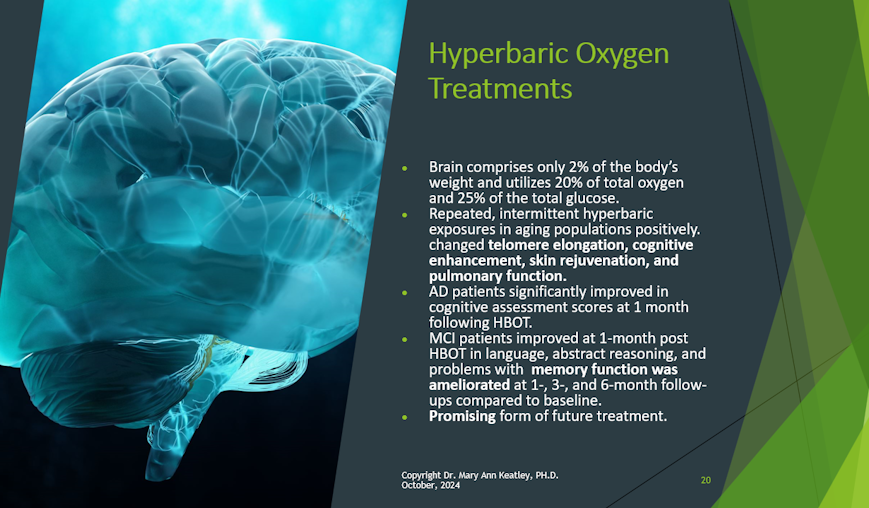
Dr. MaryAnn Keatley, a co-founder of the Brain Injury Hope Foundation, explains HBOT or hyperbaric oxygen therapy, in this graphic.
Treating a brain injury takes a team of healthcare professionals, including physical therapists, occupational therapists, speech therapists and neurologists, just to name a few. And putting together your “dream team” can be a monumental task yet an important part of recovery.
To help brain injury survivors and their families navigate the maze of rehabilitation professionals, the Brain Injury Hope Foundation invited four specialists to its April 10, 2026, Survivor Series: Brain Injury Treatment Panel: Options for Health and Wellness.
The April 10, 2026, Panel
- Dr. Amy Elsila, OD
Neuro-optometrist
Neuro-Vision Therapy Institute
https://neurovti.com/meet-dr-amy-elsila/
https://neurovti.com/vision-rehabilitation/concussion-recovery/
720-408-1400
- Rachel Walker, ND, LMT
Naturopathic medicine
Dr. Borman Chiropractic & Naturopathic Medicine
https://www.drborman.com/
303-759-8514 - Michelle Ranae Wild
Founder BEST – Brain Education Strategies & Technology
https://bestconnections.org/
michelle@bestconnections.org - Doris Sanders
Brain Injury Survivor
Naturopathic doctor Rachel Walker described naturopathic practitioners as healthcare providers who treat the whole person. “All the interconnectedness of all the systems,” she said. This includes but not limited to anatomy, physiology, clinical diagnosis, nutrition, lifestyle and herbal sciences.
“We bring in different medical traditions from all over the world,” Walker said. “We're trying to use all these different tools to find what works best for the individual. And we're trying to do it with the least force intervention in a way that works with nature and works with the natural inner workings of the human body.
“We do work alongside other providers in a complementary and also very much in the preventative side of medicine.”
- Clinical descriptions of providers https://biausa.org/brain-injury/about-brain-injury/treatment/clinician-descriptions
- Naturopathic medical education includes a strong foundation in biomedical sciences—including anatomy, physiology, pathology, and clinical diagnosis—along with in-depth training in nutrition, lifestyle medicine, botanical medicine, and physical medicine, according to the Colorado Association of Naturopathic Doctors. All naturopathic doctors must be registered and license in the state of Colorado. https://dpo.colorado.gov/Naturopathy
One of the major tools Walker uses in her practice is nutrition and dietary recommendations as numerous benefits can be accomplished with food.
“There’s this connection between the gut and the brain,” she said. “There’s also the blood-brain barrier, and then there's the barrier that’s the intestinal lining, and when you have a brain injury, they're both (impacted).”
Dr. Rachel Walker practices naturopathic medicine, which encompass the body as a whole.
Walker said these barriers can be “leaky,” which can lead to numerous health problems such as fatigue, joint pain, skin rashes (eczema/acne), brain fog and chronic inflammation.
According to Harvard Medical Publishing when the intestines are working properly, the tight barrier controls what gets absorbed into the bloodstream. An unhealthy gut lining may have large cracks or holes, allowing partially digested food, toxins and bugs to penetrate the tissues beneath it. A common initial step some practitioners take is to remove foods that can be inflammatory and could promote changes in the gut flora. Among the most common are alcohol, processed foods, certain medications, and any foods that may cause allergies or sensitivities.
- Link to Harvard Medical Publishing article on Leaky Gut https://www.health.harvard.edu/blog/leaky-gut-what-is-it-and-what-does-it-mean-for-you-2017092212451
“You don't want to be too strict with the diet” Walker explained. “I mean, when you're already going through all the symptoms of a head injury and brain fog or cognitive issues, trying to stick to something that's pretty rigid is not in anyone's best interest, but we do like an anti-inflammatory diet. So really limiting processed foods, adding healthy fats … I suggest to every patient that they go on omega-3 fatty acids.”
Another supplement Walker recommends in magnesium, but not any magnesium. “Magnesium L-Threonate. The L is inconsequential. Glycinate, orotate, malate, etc. are also fine, but there is research to suggest that threonate can cross the blood brain barrier more readily,” she explained. “Magnesium citrate is generally used for GI issues, but the one side effect of magnesium you'll usually see is diarrhea, and this one would be the one to do that to you. The others can also cause looser stools.”
- For more information on Magnesium-L-threonate https://www.medicalnewstoday.com/articles/magnesium-threonate#summary
- Seven type of magnesium https://www.nebraskamed.com/health/healthy-lifestyle/primary-care/7-types-of-magnesium-which-form-is-right-for-you
Staying hydrated and getting good quality sleep are essential, especially after a brain injury, Walker noted. She also wants patients to limit sugar, and recommends a glucose monitor as a TBI can cause survivors to become less sensitive to insulin.
- More on TBI and insulin sensitivity
“I do a lot of continuous glucose monitoring with some of my patients,” she said. “It's not necessarily that you have diabetes or your A1C is up or anything like that. It's so amazing, you can get so much information. With a continuous glucose monitor, you can just slap this thing on, and for a couple weeks, it goes right to your phone, so you know exactly where your blood sugar is at. It's an amazing technology.”
“It would be so great to have one that you would just slap on your forehead, and it would tell you what your brain is doing with that glucose, but of course, we're not there yet. That's not a real thing; I made that up,” she said.
One of the obstacles Walker faces when treating TBI survivors is the nutraceutical industry or supplement industry, which is not regulated in the United States.
“It's just overwhelming … It's expensive. It's time consuming, and it could be interacting with your other medications. It could be very dangerous,” Walker said of patients going to the internet and adding supplements to their routine. “Don't just Google. You need to come see me first, and we'll talk you down from some of this stuff. That's very important to me. And if I do put people on nutraceuticals, I like for there to be a timeline, so it's not like, here, take this forever, and that's part of who you are now. There needs to be a reason for taking it, and a reason to discontinuing it.”
- Consumer Labs a division of Consumer Reports tests supplements, along with posting recalls and warnings, drug interactions. https://www.consumerlab.com/
Walker stressed a team approach to treating a brain injury is essential and finding a naturopath who will work with your other providers can be beneficial to a survivor’s recovery.
“A brain injury affects the whole body. Nothing's in a vacuum. So, you will really do well to find a naturopath who can help you navigate with all these other specialists that you need to see, because, of course, it takes a team when you've got something this important on your hands,” she said.
Vision Therapy Is Not 20-20
A vision therapist is often recommended after a brain injury, and may be the missing link to your successful recovery. But what exactly is vision therapy or neuro-optometric rehabilitation?
“We think a lot about the visual structure of the eyeball and how well we see,” Dr. Amy Elsila said. “We might be using terminology like clarity of vision and 20-20 vision, but our vision is so much more than that. The point that I really want to impart is that vision is located throughout the brain. It usually surprises folks that there are 34 different centers in our brain that are dedicated to processing visual information.
“And between those 34 centers, there’s 300 connections. … No matter the location or severity of the injury, it’s going to impact the visual system in some way.”
Dr. Amy Elsila is a neuro-optometrist and specializes in treating TBI survivors.
Some of the common symptoms Elsila sees in TBI survivors are:
- Light sensitivity
- Blurred vision
- Eye pain/strain
- Headaches
- Double vision
- Loss of field of vision
- Loss of depth perception
- Eye tracking
Eye tracking is one issue that seems to come up frequently with brain injury survivors.
“Tracking, following something in motion, like following a ball, or when you're driving a car watching another car move past,” Elsila explained. “It’s hugely important to the way that we read. So, thinking about reading a sentence across the paper, our eyes actually move in a series of jump eye movements, so imagine that sentence, jump, jump, jump to the end of the line and jump to the next. So, we're looking at tracking accuracy, and not only the accuracy, but also how the patient feels.
“Sometimes visual motion can be highly overstimulating. Nausea and dizziness are not uncommon. Patients who loved to read before their injury and now are really unable to read comfortably a few sentences, so we're looking at tracking accuracy. We're also looking at the alignment of the eyes to see if there's any misalignment that could cause double vision or visual strain.”
When the eyes don’t work together it is referred to a binocular vision dysfunction or BVD and can lead to convergence or divergence issues.
“Looking at a cell phone or looking up close requires us to point our eyes together as a team (convergence). Looking across the room would require the eyes to move outward, divergent,” Elsila said.
“When we have a mismatch, the brain is looking for safety, and the brain is looking for stability,” Elsila explained. “So, the brain is pretty smart. It might create an adaptation where it ignores the blurry image. We call that visual suppression. And it might become more heavily reliant on that better seeing eye.”
Some treatment options include special lenses, therapeutic prisms and therapeutic tints, along with exercises to retrain the brain-eye connection and create new pathways in the brain.
“I think a good analogy is thinking about it like physical therapy for the visual system,” Elsila said. “So, what we’re doing is we’re retraining that eye-brain connection … it’s not typically a weak muscle that we're treating, it’s the connection and the kind of the collaboration between the two eyes that we're retraining.
“Vision is throughout the brain, and it impacts a whole lot more than just our sight or clarity of vision. … Vision therapy is also a therapy that can enhance or improve outcomes in other therapies, because the eyes are leading the body through space, that’s going to help us in our physical therapy activities.
“Vision is our dominant sense. So, it’s certainly a great gateway into treating the brain. …. Our eyes are just an extension of our brain.”
More on vision therapy Resources:
- Find a provider https://nora.memberclicks.net/find-a-provider#/
- Neuro-Vision Therapy Institute Website: neurovti.com
- Neuro-Optometric Rehabilitation Association (NORA): noravisionrehab.org
- Optometric Vision Development and Rehabilitation Association (OVDRA) / College of Optometrists in Vision Development (COVD): ovdra.org
HBOT and Brain Injury Recovery
Brain injury survivor and thriver Doris Sanders is a proponent of hyperbaric oxygen therapy (HBOT), and she has found great results with the therapy, so much so she bought a chamber to use at home.
Along with helping with her concussion symptoms, Sanders said the HBOT sessions helped activate immune system and helped heal wounds.
“I recently had quite a bad sore which was infected,” Sanders said. “I used the oxygen therapy, and the doctors were amazed at how quickly I got healed. The other thing is, it helps with your immune system.”
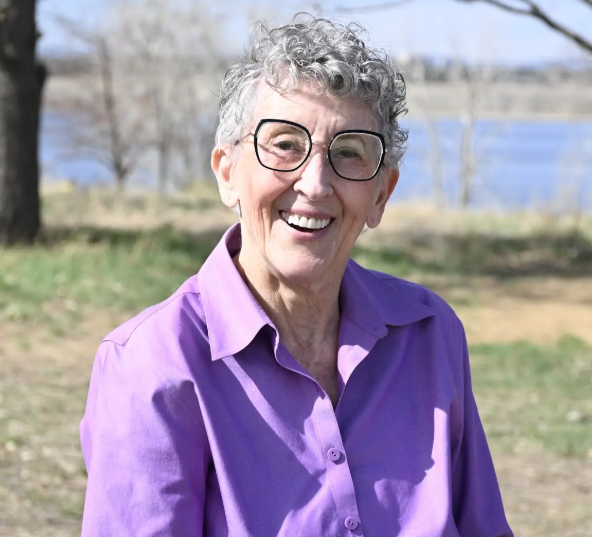
Doris Sanders uses hyperbaric oxygen therapy (HBOT) to help with concussion issues. She also notices improvements in her immune system after a session.
A hyperbaric oxygen therapy session takes about 45-60 minutes. The client sits or reclines in a chamber while concentrated oxygen is pumped into the chamber in order to increase oxygen in the blood and tissues. HBOT was first used to treat deep sea divers who experienced decompression sickness.
TBI survivors have experienced help with cognitive abilities, including executive function, information processing speed, attention, memory, and motor skills after a session. Meanwhile some studies have revealed widespread differences in results. https://www.health.mil/Reference-Center/Publications/2025/07/25/Hyperbaric-Oxygen-Therapy-and-TBI
Either way, Sanders said HBOT has increased her abilities to function after suffering numerous brain injuries. As a young girl, she worked on a ranch and was kicked in the head by a horse. She also loved racing her motorcycle and jumping out of airplanes.
“Those were the kind of activities that I really enjoyed, and so I kept having blows to the head,” she said.
HBOT can be expensive and is not covered by insurance. However, Sanders put together a list of places that offer discounts for sessions. Here is a link to the PDF.
- For more on HBOT
Technology to Enhance TBI Recovery
Michelle Ranae Wild, founder of BEST – Brain Education Strategies Technology, has spent more than 40 years “teaching adults living with brain injury how to deal with the challenges that they have in an educational environment.”
Wild, who has a degree in psychology, said helping TBI survivors is a passion she holds dearly.
“It’s something that I have a huge passion for, and I’m very interested in the concept of brain injury,” she explained. “I love the idea that I can always come up with more strategies and more things to try to help people with brain injuries.
“As we know, every person with a brain injury might have similar kinds of challenges, but what works for one person doesn’t always work for another person. That’s a huge challenge for people in my profession, because it’s not one-size-fits-all.”
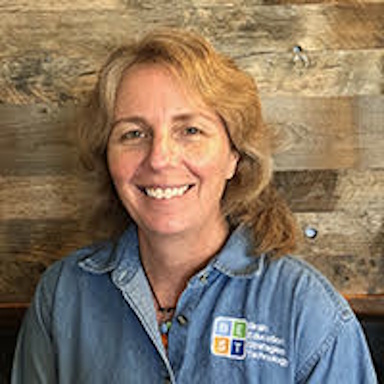
Michelle Ranae Wild is CEO and founder of the nonprofit BEST – Brain Education Strategies Technology, which helps brain injury survivors with daily life challenges.
Wild said she would be “bored” if there were not challenges to helping TBI survivors.
“I don’t get discouraged when it doesn’t work the first time or the second time because I’ve done this long enough to know that it really takes a while to find the right strategies or the right approach for each individual.”
- For more information on BEST
- BESTConnections.org
Wild’s nonprofit BEST focuses on executive function challenges facing survivors.
“Cognitive skills, I’m talking about thinking skills, organization, decision-making, and problem solving, and attention and memory. All those very standard cognitive skills, executive function skills that we talk about when we talk about brain injury,” she said, adding that she started BEST because of the financial strain people face after a brain injury.
“I understand the implication of brain injury financially. I know that many people after a brain injury deal with financial struggles,” Wild explained. “So, my goal was to really create something that would allow people to benefit, basically, from learning about the cognitive challenges they have, and to do it in an environment that they could afford and felt safe in.”
BEST offers free programs along with a paid membership program - $10 monthly or $100 yearly. The free programs include webinars and deep dive workshops, along with apps.
“We do 24 webinars a year, the second and the fourth Saturdays of the month,” Wild said. “Some of them are cognitive in nature, some of them are behavioral.”
The Zoom webinars are also topic based, such as brain injury from the caregiver’s perspective, and how to deal with automatic negative thoughts or ANTS.
BEST offers free apps that can help brain injury survivors navigate their day with reminders. The nonprofit is currently updating their apps and introducing a new app – StrategizeMyLife.
“App development and apps is something I’ve been interested in for about the last 15 years,” Wild explained “Before I even started BEST, I was very interested in technology and using technology with those living with brain injury. And so over the course of the last 15 years, I’ve developed quite a few different apps.
“We’re actually revamping our apps a little bit right now in order to re-release them with some of the latest technology.”
One free app BEST is currently finalizing is StrategizeMyLife, which is in beta release with an official launch in May 2026.
Wild said that during the Survivor Series she was thinking how survivors could use her new app by adding vision therapy to their routine.
“You could put those strategies in StrategizeMyLife,” she said. “In fact, I have a number of individuals that I've worked with over time that have vision therapy as a category. And so, when they have a flare of some issues, they go to StrategizeMyLife, and they look at those strategies, and they’re right there where they need them, and they’re able to use them.
“Same thing with fight-or-flight. If someone had fight-or-flight issues, they could enter the strategies that they know work for them when they are in that fight-or-flight state,” she explained. “It's just a common place that people can enter strategies and rate them in terms of how effective they are for that person. So, one strategy might work really well for one person, but it doesn't work for others.”
Wild mentioned a challenge many survivors often feel is being overwhelmed by all the therapies and work they face in a lifetime of recovery, something the other panelists cited.
“Feelings of being overwhelmed, trying to do too much. A lot of people want to be able to do what they did before their injury, and that’s a huge challenge,” Wild said. “That becomes a big factor.”
Wild stressed “Scale Up Not Back” as one of her strategies to fight fatigue that comes with being overwhelmed.
“Starting off slow and steady, and scaling up from there,” she said. “For instance, if you’re reading a book, don’t try to read the entire chapter. Maybe the entire chapter is too much for you. Read a few pages. See how that feels, and then if you have more energy and you have more time, you can always add more pages.
“My focus is really on helping people pace themselves so that they don’t end up overdoing it, and then wiping themselves out, because the negative effect of that can be several days or several hours.”
Another challenge Wild sees in TBI survivors is behavioral changes.
“I don't think it's uncommon for people’s behavior to change after a brain injury. Sometimes they just get more frustrated. They were never a person that got frustrated before, and now things just kind of frustrate them. Or they may get angry about things,” she said.
“I get a lot of feedback from BESTies that what we do really helps guide them. It gives them a path. It serves as a guiding place for them, because we try to break things down. I try to help them identify what their particular challenges are, and then often we will spend time trying to figure out what specific things will work for them.”
