Blog

/Blog

Innovative Ways to Create a New Life and Positive Experiences
October 12th, 2025|Blog|

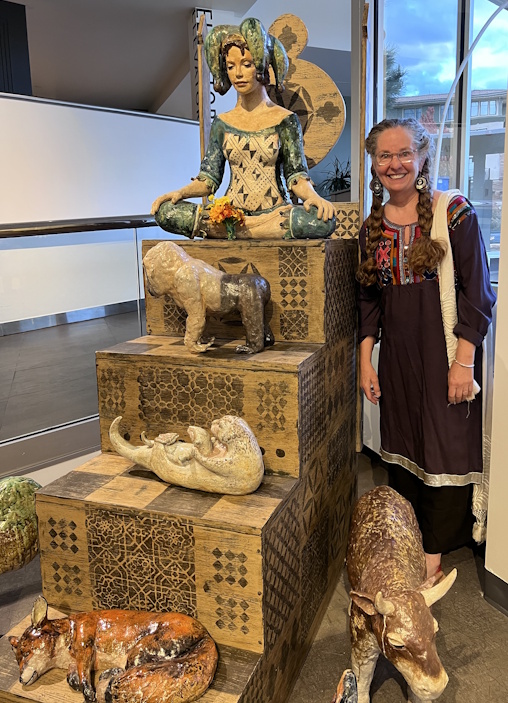
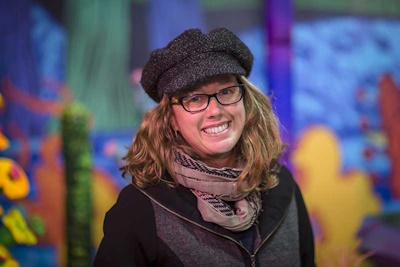
Ceramic artist Caroline Douglas with some of her artwork says creating art helped her heal from a traumatic brain injury. Visit https://www.carolinedouglas.com to see more of Caroline Douglas’ art.

By Eliza Marie Somers

Being vulnerable is scary, however, it might be the magic sauce that helps brain injury survivors in their pursuit of new and successful possibilities.

During the October 10, 2025, Survivor Series: Innovative Ways to Create a New Life and Positive Experiences, the panelists related how they stepped out of their comfort zones to tackle the maze of therapies and create a successful life after traumatic brain injuries.

Vulnerability in a person is the state of being open and honest about their emotions, thoughts, and needs, often despite a fear of rejection, judgment, or misunderstanding.

In 2017 TBI survivor and panelist Jena Taylor suffered a “whopper” of a brain injury that sidelined her life as she had to learn how to walk and talk again. At the time of her injury, she was living alone and needed help with her recovery. She experienced how vulnerable she was when she called her mother to enlist her help. However, Taylor did not find support from her mother.

“It was devastating,” Taylor said. “I made a phone call to my mom, who lived in Arizona. I was living in Denver at the time. And I told her about my accident, about my status, and that I couldn't do anything for myself, and could she please come and help me. And the answer was, ‘No. I couldn't possibly leave my life, just because you're having a crisis.’ And that was very, very difficult. It was extremely painful, and it was shocking.

“And then she kept calling, and my neurologist kept saying, ‘Stress is your biggest enemy with recovery. Eliminate any and all stress.’ And I kept warning my mom that if she was going to continue to contribute to my stress, which was a detriment to my recovery, then she couldn't be in my life. And as hard as that was for me, I did say it. I did stick to it. And my mom and I didn't speak for three years. No communication whatsoever.”

Fast forward to today, and Taylor and her mom are on speaking terms.

“We made peace,” she said. “It’s a part of my life that was very painful.”

Taylor is not alone in finding stress in relationships after a TBI, as friends and family members may not understand the “hidden” symptoms of TBI and they may be unsure how to help so they drift away, leaving survivors to fend for themselves.
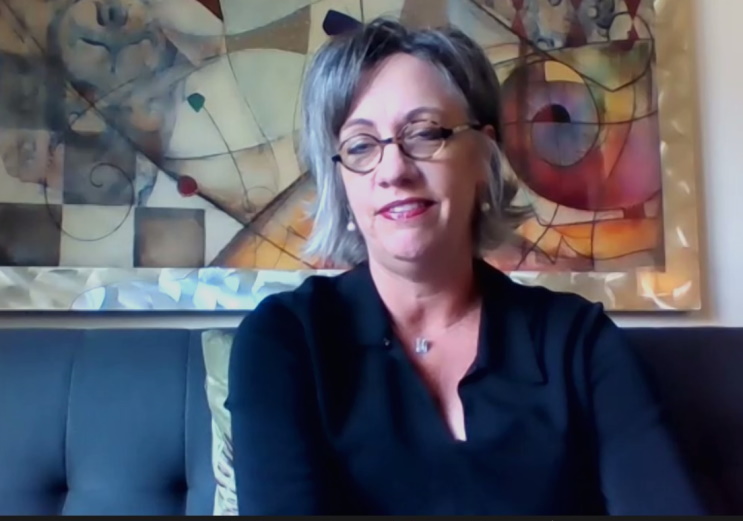
Jena Taylor says she relied on her resiliency and her day-to-day dedication to therapy to heal from a TBI.

Taylor found help from her friends and the Brain Injury Hope Foundation team.

“I had a village helping me; a really excellent care team, and the Brain Injury Hope Foundation. (BIHF vice president Joanne Cohen) was the first person that really kind of gave me some hope. … that really catapulted me into this position of thriving.”

Taylor’s mindset was that her recovery was a full-time job as she navigated her way through numerous therapies, including physical therapy, cognitive therapy, vision therapy, vestibular therapy and occupational therapy to name a few.

“How did I rebuild my life? I did it day by day,” Taylor explained. “A series of small events, or, like in the very beginning stages of my injury I was inundated with therapies. … My recovery was a full-time job. I was committed to it like it was my full-time job. I made a decision early that I was going to give it a full year. I would go into debt; I would spend as much money as I had to, and after the end of the year, I was going to decide and evaluate: Can I do what I did before? If not, what can I do? Because living like that wasn't going to work for me.

“It wasn’t even the end of the year and I was back on track. I was making six figures, and I was writing copy for IBM Watson Health. So, I had a dramatic recovery. It didn't seem like it at first, because it was so slow, it was so slow. And I just focused on every therapy, and like I said, I did it like my life depended on it.”

Taylor’s dedication and a workman-like approach to her therapies catapulted her recovery. However, it was her resilience that she cultivated from numerous events such as her apartment flooding twice, an abusive relationship and her service dog dying right before hip surgery, that put the icing on top of her recovery cake.

“A lot of these things happened, and I would take it back to ‘I am resilient. If I can survive this, I can survive that.’ I just kept digging deeper and deeper and deeper. Everyone around me was like, ‘How in the hell can you do this? How are you still smiling? Why are you joyful? Why aren't you curled up in a corner somewhere just giving up on life?’ And I just said, ‘That's not an option for me. You know, I'm resilient.’ I took this resilience and I have actually switched gears; I'm still a marketing strategist, I'll always be a salesperson, but I'm also a resilience strategist, and I've launched an entire new brand under my Word Tailor company, and it's to help people build that resiliency muscle.”

Resilience: the capacity to withstand or to recover quickly from difficulties.

Taylor’s new venture – Resilience Brilliance https://www.resiliencebrilliance.co/ – helps people build “that resiliency muscle.”

“Life is turbulent. Life is messy. It's hard. So, I teach people these tools that I've learned through my study and my own experience to be able to tap into those skills and build that resilience muscle so that we can handle and cope with these things that life gives us. … We have to flex that resilience muscle all the time.”

So how do you flex the resiliency muscle?

“Despite our limitations, if we do work on things daily, in small bits, then we become stronger, and our situation improves. …There is no cap on our resilience, and learning to grow.”

Healing Through the Arts

Artist Caroline Douglas became vulnerable when she decided to come back after a near death experience after her brain injury. While helping her daughter decorate a gym for her 8th grade graduation, Douglas was on a cherry-picker extension ladder when it gave way and crushed her skull.

“It collapsed onto my head… my head was between the cage and the ladder… and I had a moment of OK; I need to be really aware; this is a very important moment. Time slowed down. And as the thing started falling over, I --this may sound kind of funny -- but I left my body,” Douglas explained. “I went to the corner of the room, and I was watching down from the corner as my head was crushed and my body fell. So, I took this extremely long moment where I felt like everything is totally fine. There is nothing to worry about, the world works itself out, everything is perfect. And I was surrounded by white light. I didn't see a tunnel, but it just was, like, bliss. It was very blissful. …

“So, in this state, I was looking down at that body, and blood was all over the floor, and I heard a voice inside my head say, ‘You have a choice.’ And I took another long moment, and I looked at that body and thought, I'm not so sure. But, as soon as I sort of panned the room, and I saw my son, who was 9 years old at the time. He was holding his lunchbox, and he was staring at my body. And so, I said, I really want to stay for him.”

After more than two years of numerous therapy sessions and still having difficulty with sleeping and speaking, one of her doctors encouraged Douglas, who has a degree in ceramic arts, to start creating art again.

“At that point, I think I had two frozen shoulders and a broken hand, and my husband would put the clay out on the table, and I would just make these things. … After I was able to sleep through the night, I started having dreams of these pieces that wanted to be made with urgency.

“And in the making of these clay pieces is where my brain started coming back, and I could tell I was getting better.”

Douglas’ art pieces reflected her recovery. In “Babbel” Douglas said the letters above her head resembled the fact that she could not form letters into words.
“Working with the clay gave me time alone in the quiet space,” she said. “Motor skills were able to come back as I did this.”

Douglas described one of her works that she saw in a dream that depicted an elephant head and she is under the head. “The reason that dream came to me was because whenever I would try to go to the grocery store, I would be overwhelmed with the lights and the people talking to me, and I would faint, so I felt like I had to become bigger than I thought I was instead of shrinking. I can take up some space here.

“In the making of these pieces, I felt healed. I felt I was in flow,” she said. “My brain was relaxed. My hands were working; there was some vessel channeling thing happening.

“Most of the time that I wasn't working in clay, I was so anxious. I was a nervous wreck. But when I worked with clay, it made it safe for me to come into my body. And I made all of these women with their eyes shut, with these extremely serene. expressions. As I made them, I became them. ... I feel like that was a huge part of my healing.

“It's kind of like a magical thing that happens with me and clay, and I think it can for a lot of people.”

A big part of Douglas’ recovery was her family. “My family was so, so supportive. Honestly, I felt like I was surrounded by angels,” she said. “I felt like I had to re-meet my friends, because I just couldn't show up for them, but my family was there for me.”

Douglas’ psychic abilities started when she was younger, and were further enhanced after her TBI.

“I felt one foot in this world, one foot in that world, and the dreams at night. … The finished piece would show itself on a lazy Susan in the round, and I would see all sides of it. And I would wake up, and I would just get the clay, and start making.”

Douglas said she went to school to learn how to deal with her psychic abilities and learned “how to ground and take care of my energy more, and then I started teaching energy tools for people with head injuries. After that, I started showing my work and teaching about creativity as a healing tool. … I was asked to travel all around the world, Morocco, Mexico, Latvia, all over teaching people how to find their own joy and creativity. And it could be in any medium, but mine just happens to be clay.”

Use the Brain to Heal the Brain

Physical therapist Mary Pavlantos dedicated her life to helping brain injury survivors after her father suffered a TBI in a rollover accident when she was in high school. The resulting injury caused her father to lose the family business and the family home.

“We lost everything, so I was left figure out life on my own at 18, and so I just dedicated my career to helping people with brain injuries,” Pavlantos said.

Physical therapist Mary Pavlantos is healing alongside her patients as she recovers from a brain injury due to COVID-19. Her company is Roots Physical Therapy and Wellness https://www.rootsptandwellnessco.com.

After receiving a Doctor of Physical Therapy degree and a Bachelor of Science degree in Kinesiology and Leisure Science Pavlantos worked at Craig Hospital treating brain injury survivors. 

But her career was put on hold in 2021 after she almost died of COVID-19 and has since suffered from long haul COVID in which the virus attacked her brain and nervous system causing encephalomalacia and organ failure.

“It's been a journey dealing with the brain injury and all the organ failure issues because of this virus, but I'm determined to get better. I'm a single mom, I'm a business owner, I just could relate so much to Jena’s story of being alone and figuring this out. … So, I better rally in the troops here and figure out how to get better.”

Pavlantos experienced the loneliness of losing friends when she needed them the most.

“A lot of my friends ran in the other direction, which I'm sure a lot of you can relate to,” she said. “You just figure out who those people are that are going to pull together to have your back and see you for your true self … despite having all these weird symptoms happening to your body.”

Pavlantos is still rebuilding her life after just recently having another hospital stay in the summer and continuing numerous therapy sessions, including biofeedback. 

“My biggest motto is use the brain to heal the brain,” she said. “And sleep is obviously a huge component. I use the charging the phone analogy, and too many apps are running, and we got to close some apps, and take brain breaks.”

Pavlantos said she has seen the miracle of brain neuroplasticity in her work as a therapist. She related a story of a young patient who was violent after a TBI and within three months of working with him he gave her a big hug and a scarf and gloves.

“He said ‘Dr. Mary, thank you for helping me heal my brain.’ And that was the moment I was like, oh my God, neuroplasticity is no joke.”

Thus using the brain to heal the brain.

“I usually explain neuroplasticity like a traffic jam, or a disconnect in the neurons, and they're just not connecting. Those brain farts, if you will. You're just re-patterning by practice to reconnect those networks, and sometimes they just don't reconnect. That's when you have to adapt and use reminders, calendars, and sticky notes. You got to use your tools. Very often, if you repeat and practice, a new neuron network will connect and recreate that pathway that got injured.”

After her brain injury Pavlantos said she has changed her approach to physical therapy when working with patients. 

“I'm just not so pushy on the home exercise program,” she said. “if you get to it for less than three minutes, go ahead and try before you go to bed, and then just go to sleep. … If you have trouble focusing near and far, then do that three to five times as your exercise, or if you get dizzy when you turn a corner, stop, take a deep breath, and go repeat that same thing three to five times. So, I just integrate more functional retraining into life.”

“It's been very interesting, because healing alongside my patients has been a totally different experience, and it's just shown me so much more that I didn't see before, because it was so black and white … now the level of empathy is just completely different.” 

Pavlantos leaned on her faith to help her through her recovery. 

“My biggest tools in my darkest days were my faith in a higher power. I call it God, call it whatever you want, but the environment, nature, trees, the sun, the birds,  using Mother Nature and Earth,” she said “Just trying to find as much happiness and peace where you can, and things that give you that. And absolutely taking out all of the toxins like, sugar, alcohol and toxic people. It really will allow you so much more peace and comfort and tranquility if you can get rid of those toxic relationships and substances. … Find your healthy tools.” 

Final Thoughts and Useful Articles 

Mary Pavlantos: One patient told me if you have one foot in the future and one foot in the past, you're pissing on the present. So, I would say live in the now. 

Brain Injury Recovery Guide by Mary Pavlantos. 

Jena Taylor: Stay the course. Reframe adversity, because it fuels your growth. No matter what life throws your way. Mindset is so important as we go through anything in life, and healing from a traumatic brain injury is traumatic.

Caroline Douglas: Find what delights you and follow that. Trust yourself. Trust your spiritual self, trust your physical self, and show up for what brings you joy.
Comments Off on Innovative Ways to Create a New Life and Positive Experiences

The Art of Neuro-Anatomy: The Marriage of Art, Science and the Brain.

September 12th, 2025|Blog|

Artist Katie Caron created artwork while recovering from a horrific accident. Courtesy of Katie Caron’s website

By Eliza Marie Somers

Finding a creative outlet while recovering from a traumatic brain injury might just be the therapy you are missing. After suffering a horrific accident when a wall fell on her, artist Katie Caron relied on her creativity to help her through a long and painful recovery.

“I was on a lot of pain medication that didn’t allow me to read, but I could be creative, and it really opened up a side of myself that I hadn’t really experienced before,” Caron said during the Sept. 12, 2025, Brain Injury Hope Foundation’s Survivor Series: The Art of Neuro-Anatomy: The Marriage of Art, Science and the Brain.

“This was a very therapeutic process for me, but I didn’t know it at the time,” Caron revealed.

While recovering in a nursing home, Caron, who had just received her master’s degree in fine arts, began taking out her frustrations in her art.

“I couldn't move. I couldn't be free. And so, I kind of took the anger out on the paper. I squeezed the paper, and I opened it up again and saw all the kind of wrinkles that it made. And the wrinkles looked and felt sort of like that injury like that point of contact, that point where the wall broke me. … I ended up probably doing maybe 40 drawings while I was in there.”

Caron moved back to Colorado to be with family while continuing her therapy. She also  started teaching at the Rocky Mountain College of Art and Design. While rehabbing and teaching she exhibited her drawings called “Mending” at the college.

“I was using art to mend myself, my brain and my body,” she said.

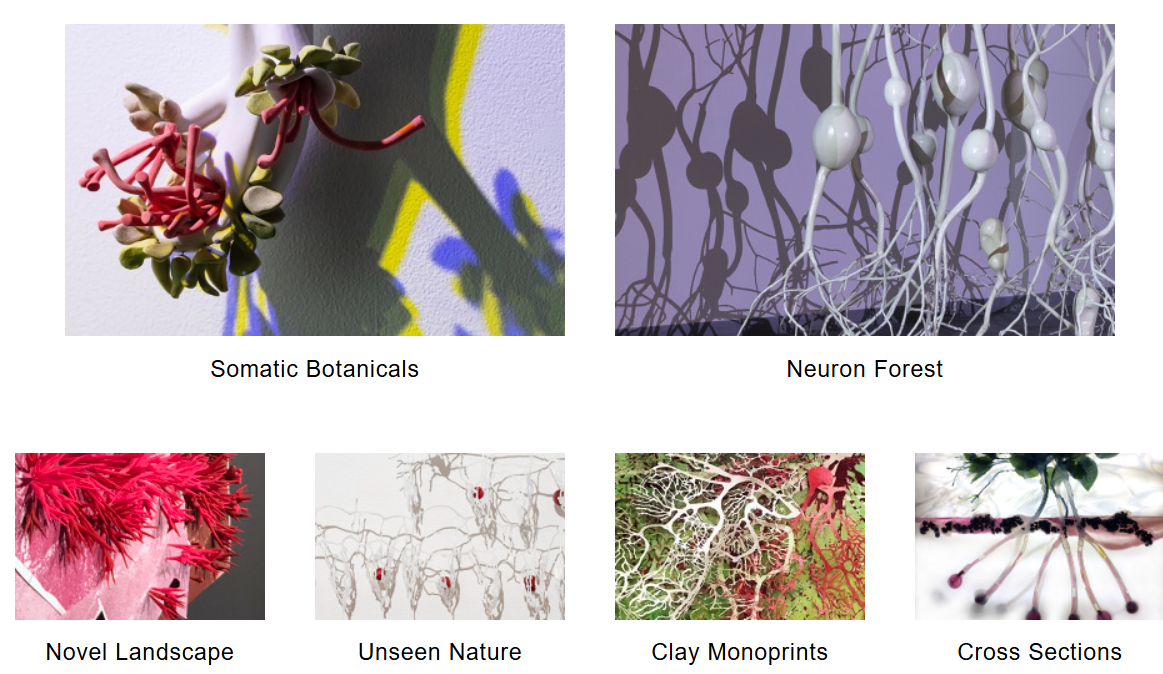
Her experience with a traumatic brain injury also created a desire  to understand the brain and resulted in her creating the “Neuron Forest” sculpture. Along with the large project, Caron teamed up with neuroscientist Dr. Maureen Stabio, an associate professor in the Department of Cell and Developmental Biology at the University of Colorado School of Medicine. Dr. Stabio directs the Modern Human Anatomy Program , a master’s degree program that blends anatomy with 3D visualization and medicine.

For more on the Neuron Forest and the process of making the artwork
https://www.thirdduneproductions.com/cu-anschutz-katie-caron

“When I met Katie, I was so excited because she said, ‘Hey, I want to get people excited about the wonder and beauty of science and nature. Do you want to be a part of this?’ And I'm like, ‘Yes. This is what I try to do in the classroom,’” Stabio said in a video presentation about the Neuron Forest. “The partnership between an artist and a scientist is a win-win, and, in fact, some of the earliest neuroscientists were passionate artists. An example is Santiago Ramon y Cajal, who's considered the father of neuroscience.”

Santiago Ramon y Cajal received the Nobel Prize in Physiology and Medicine in 1906. His drawings of brain cells and neurons are still in use today.

“We both want to understand how the world works,” Caron said. “I feel like the artist is investigating it through maybe more of an intuitive and a psychological point of view, and the scientist is investigating it through an analytical mathematical point of view. But I think we're both trying to find the same answers.”

With the Neuron Forest, artist Caron said, “I finally made that thing that caused me that sense of wonder.”

Katie Caron said creating art helped her understand her internal body structure.

Creating the sculpture enabled Caron to “have a visual experience. I feel like my understanding of why my internal body structure looks just like a tree, or looks just like electricity that connects me to the universe … These branching structures are what sort of unites everything. It's almost like an existential religion.”

Stabio explained her passion for neurons and why she has been interested in the brain cells.

“One of the reasons I love neurons so much and why they are so fascinating to me compared with all other cells of the body is that they are electrical,” Stabio explained. “So, your computer is working right now because of the electrons that are running through the wire from your wall to the computer. Neurons are also electrical, and they conduct electricity in a similar way. Instead of  carrying electrons, they're carrying ions, essentially sodium, potassium and chloride.

“So, neurons use that electricity to connect and to speak to one another, and to send messages. Your car battery is 12 volts. Your electrical outlet in your wall is 120 volts. In the nervous system, it's a hundred millivolt (a millivolt is 1/1,000 of a volt).

“And in your brain, you have 86 billion neurons, which is I think mind boggling,” Stabio continued. “Each neuron can make thousands of connections to other neurons. They're very chatty. They're very social, and they like to be connected. So, they form networks like Katie showed in her art.”

Interpreting those signals and understanding their code is the “basis of technologies that are healing people today. Like deep brain stimulations, vagal nerve stimulation … Like Elon Musk putting electrodes in the brain.”

Because the brain likes to make electrical connections it is possible to rewire the brain after a traumatic brain injury, aka neuroplasticity.

“The brain is one of the most fragile organs of the body, and it is one of the most resilient because it can change, it can learn, and it can adapt. The people who have come through brain injury are testament to that,” Stabio said.

Dr. Maureen Stabio says, the brain is one of the most fragile organs of the body, and it is one of the most resilient because it can change, it can learn, and it can adapt

“The saying that you can't teach an old dog new tricks is wrong because neuroscience has shown the brain continues to be adaptable throughout life. … The pediatric brain is incredibly resilient, and it can rewire to the other side of the brain when there's damage on one side. This is harder to do in an adult. It can still be done, but it's harder, it takes longer, and sometimes we need some support.”

Some of the “support” Stabio alluded to includes research by her colleague Dr. Cristin Welle, professor and vice chair of research for the Department of Neurosurgery at the University of Colorado School of Medicine, whose lab is exploring the frontiers of neurotechnology, including vagus nerve stimulation.

Welle and her colleagues discovered a direct link between vagus nerve stimulation and its connection to the learning centers of the brain.

“The idea of being able to move the brain into a state where it’s able to learn new things is important for any disorders that have motor or cognitive impairments,” Welle said in a report on the CU Anschutz website. “Our hope is that vagus nerve stimulation can be paired with ongoing rehabilitation in disorders for patients who are recovering from a stroke, traumatic brain injury, PTSD or a number of other conditions.”

So how can a TBI survivor create those new connections and rewire their brain?

“Practice and learning,” Stabio said. “The more you practice something the stronger the connection gets. Neurons that fire together, wire together. So, doing new things and learning new things.”

Along with learning and practicing new things, exercise is also crucial to the brain.

“Research shows the best thing you can do for the aging brain is cardiovascular exercise,” Stabio cited a recent study that linked reduced risk of dementia with step count. “They say, 4,000 steps a day can reduce your risk of dementia by 25 percent; 10,000 steps a day reduces your risk by 50 percent. Cardiovascular exercise, learning new things, engaging in conversation with people, keeping off the endless scrolling on the cellphone (just like we tell our teenagers), going out to dinner with friends, having conversations and being together in human interaction” all help the brain heal and create new connections.

When asked about the marriage of art, science and the brain, Stabio elaborated: “I have a soft spot for the arts, and I felt like something came alive in me when I got to work with Katie.”

“I see the divine in the human body because of its intrinsic beauty. The awe-inspiring complexity; the hidden patterns; the logic that's behind the order. For example, the fractal patterns in neurons are optimized to maximize the connectivity and minimize the energy requirement on them. We've studied their fractal geometry in the neuroscience field. And so, I have a very strong faith, and when I became a scientist, my faith grew even more because I saw this incredible wonder. … When I look in the microscope, I see the hands of a Creator. How that creative process happened and how long it took is another question for other scientists. I think everybody has their own experience with art and science, and that's been what mine is.”

Caron said: “I'm a naturalist. … And for me, it's really about the abstraction of it, and not the literal nature of it. So, I'm trying to create an abstraction and a metaphor, and an emotion in response to the body, and the nature and the connection between the two. I see myself as an abstract artist. So, for me, it's grounded in science, but also in abstraction.”

Caron finished by encouraging other TBI survivors to explore their creativity while also staying focused on what’s important in life.

“I don't want anyone to ever experience the trauma that I experience, but things happen in life, and you don't know when it's going to happen … Try  staying true to yourself -- the things that you care about and not compromising that.

“Sometimes we get caught up in money and class and status. … Don't get distracted by things  that aren't really meaningful to you. Like, as Maureen said, we all get very distracted with our phones, and we get distracted with what other people are doing … Follow what interests you and the things that you care about.”

Valuable Medical Research Through Plastination Specimens

Out of respect to brain donors and their families a portion of the September 2025 Survivor Series was not recorded when neuroscientist Dr. Maureen Stabio exhibited brain specimens.

Stabio, who was in the CU Plastination Organ Library lab, first displayed a dissection and plastination of the whole nervous system.

“You can see the brain at the top that sends the messages down the spinal cord. And then these are all of the peripheral nerves exiting the body. So that was a healthy nervous system that we created to teach students about the system as a whole, and how it's connected,” Stabio explained.

  • The plastination process replaces water and fat in biological tissues with polymers, creating dry, durable and odorless specimens for anatomical study and display. 

The associate professor in the Department of Cell and Developmental Biology at the University of Colorado School of Medicine then displayed several brains, including a donor who had Parkinson’s disease, a brain from a multiple sclerosis patient, a brain from a donor who had a benign brain tumor called a meningioma, and a brain from a stroke patient. Interesting enough Stabio did not have a specimen of an Alzheimer’s patient’s brain as it was lent out to students to study the disease.

However, Stabio showed a 3D brain model from Phineas Gage, the “father of brain injury.”

Gage, a foreman on a railroad construction crew, suffered a severe brain injury in September 1848 when an accidental explosion of a charge he set blew his tamping iron through his head. The tamping iron, which was 3-feet, 7-inches and weighed almost 14 pounds, went through his left cheek and through the top of his head, landing 25-30 yards behind him.

Gage lived until May 1860; however, he was not the same person after the injury. The friendly and likeable Gage became fitful, irreverent, and grossly profane, showing little deference for others, said Dr. John Martyn Harlow, who initially treated Gage.

Gage’s injury and his personality about-face resulted in some of the first medical knowledge gained on the relationship between personality and the brain's frontal lobe. Gage’s brain was eventually donated to Harvard University.

“The Harvard Museum of Anatomy has the CT scan of his skull,” Stabio said. “We downloaded the CT scan and 3D printed it. So, this is an exact 3D printed replica of Phineas Gage’s skull.

“And what we did was make a replica for teaching. So, he survived without all of this brain area, but they said that he was no longer Gage. Again, he had changed. And that's because the personality and decision making, and your inhibition holding you back from saying something you shouldn't say is in the frontal lobe. And that was the area that was damaged.”

Dr. Maureen Stabio started the CU Plastination Library in 2016 as a collection of brains for Brain Awareness Week. It has expanded to and it has expanded to include organs of all systems - healthy, diseased, and anomalous cases. Specimens are shared through a lending library system that has served over 9,000 students.

Comments Off on The Art of Neuro-Anatomy: The Marriage of Art, Science and the Brain.

Rewiring Your Brain Through Mindfulness, Yoga, Meditation, and Community

June 13th, 2025|Blog|

Courtesy of Love Your Brain.

By Eliza Marie Somers

Practicing yoga after a traumatic brain injury might be the last thing on the minds of many TBI survivors, although research reveals it just might be a key missing ingredient in the recovery process.

An adaptive, gentle yoga practice that combines breath work, meditation and mindfulness has been shown to be effective in improving balance, posture, cognition, sleep, memory and muscle development, along with increasing a positive mindset.

“The greatest way that yoga is different from many other forms of exercise is that it is integrated -- yoga connects the mind and the body,” said Bridget Hearne, program manager for the nonprofit Love Your Brain. “This mind, body integration is your relationship with your thoughts, your emotions and physical sensations.”

Hearne gave an interactive and enlightening presentation on the benefits of yoga, meditation and mindfulness for TBI survivors and care partners during the Brain Injury Hope Foundation’s June 13, 2025, Survivor Series: Rewiring Your Brain Through Mindfulness, Yoga, Meditation, and Community.

What is Yoga?

Many people think of yoga as just a physical practice with people holding upside-down poses or students contorting their bodies into pretzel-like poses. However, yoga also incorporates breathing exercises, mindfulness and meditations, which can include visualizations, and yoga comes in many forms, such as restorative yoga and yoga nidra.

“At Love Your Brain we really emphasize yoga’s whole practice,” Hearne said. “And the beautiful thing is anyone can practice yoga.”

Program Manager for Love Your Brain Mindset and Trainings Bridget Hearne says finding a yoga practice and teacher that meets your needs is key to recovery.

However, it is the “right” yoga practice that can be beneficial to TBI survivors.

“I like to emphasize that it's really important to find yoga practices that are adapted to your needs,” Hearne said. “If you go to a yoga class, and it is one of the more upside-down yoga classes it could cause symptoms to really be exacerbated.”

Benefits of an Integrated Yoga Practice

Yoga and mindfulness have been practiced for thousands of years because of the numerous health benefits associated with the disciplines. Now research over the past 10-20 years backs those claims.

“Yoga, meditation and mindfulness practices -- when it comes to brain injuries -- have been shown to improve cognitive fatigue and depression,” Hearne said.
She went on to list more research-backed benefits, including:

  • Lessens pain
  • Improves sleep and emotional regulation
  • Augments memory and attention
  • Boosts balance and mobility
  • Increases muscle mass
  • Increases relaxation and awareness
  • Increases physical and emotional well-being
  • Enhances resilience and quality of life

“We could spend the next three hours reading through all the research … but I would like cover just a few of the benefits, especially for a lot of the common challenges we hear in our line of work,” Hearne said.

“The first one we always hear is a decrease in anxiety and stress. … Physical relaxation is going to help decrease anxiety and stress, but yoga and mindfulness can actually directly influence our bodies’ chemistry or neurochemistry,” she said. “It promotes the release of calming hormones like gaba, melatonin and serotonin while also reducing muscular tension

“And, when it comes to depression, same thing, it directly can influence the body's neurochemistry by reducing cortisol, our stress hormone. And then releasing those things that promote relaxation and happiness and rest -- serotonin, dopamine, melatonin.”

Studies and Articles on Yoga and TBI

Rewiring the Brain through Mindfulness

Mindfulness can be described as “living in the moment without judgment,” but how can it help brain injury survivors?

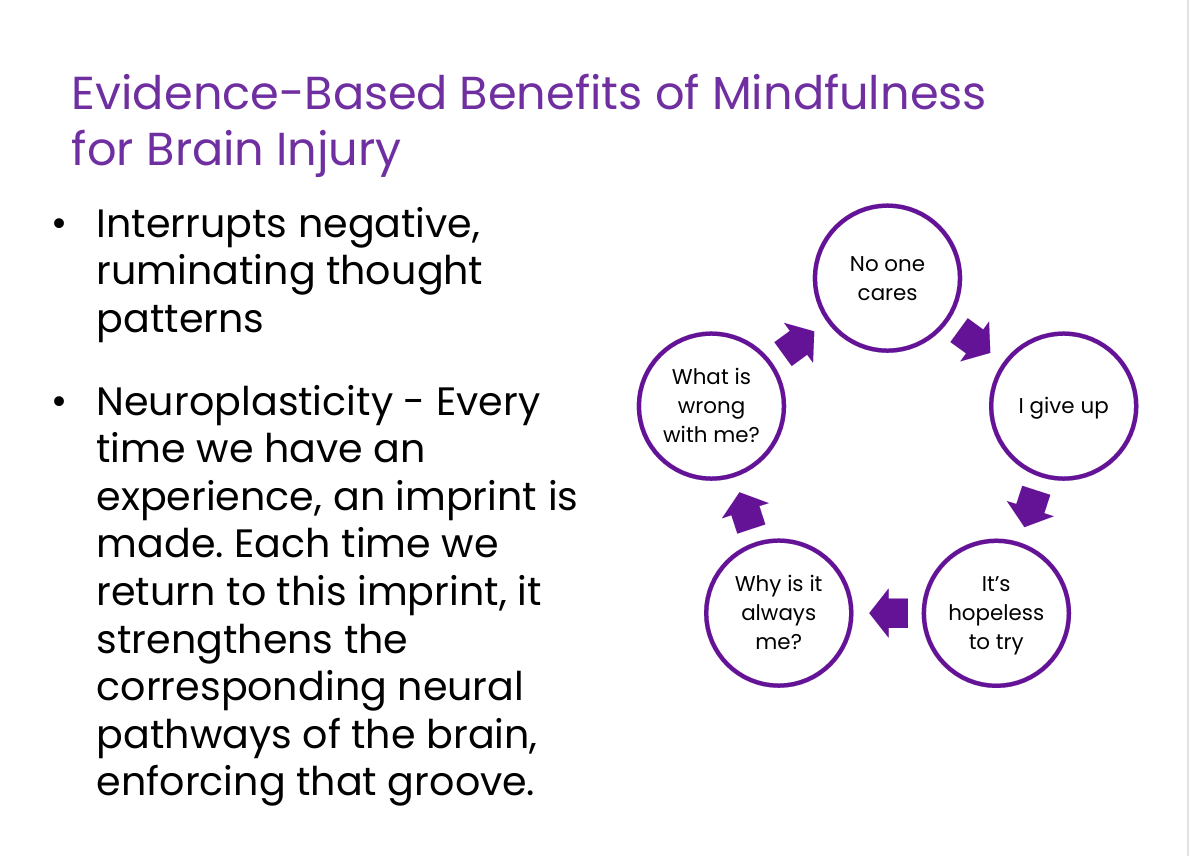
“Mindfulness can interrupt negative and ruminating thought patterns,” Hearne explained. “For folks who've experienced a brain injury these negative thought patterns can become really deep and unconscious. … So, (survivors) get stuck in this sort of loop of these negative thought patterns, and this only exacerbates all those symptoms of anxiety, stress and depression.”

Courtesy of Love Your Brain

Being mindful and focusing on the present moment can stop a survivor from thinking about the past and what they have lost because of the brain injury or from thinking about the future in a negative frame. By using mindfulness, the brain can create new neuro pathways through neuroplasticity by reinforcing positive emotions and thoughts.

“Essentially your brain has a really remarkable ability to adapt and reorganize, and form new connections. You can think about it this way: each time we have a thought pattern, or each time we perform an action, and then we do it again. It only reinforces the corresponding pathways of the brain,” Hearne said.

“When we're talking about these negative thought patterns that often accompany any kind of injury, especially a brain injury, those habitual and recurring thoughts are really only being strengthened and reinforced each time you return to them. So, the power of yoga, meditation, any form of mindfulness, really, is that we can interrupt these negative thought patterns and actually rewire the brain.”

So, how do you practice mindfulness in every day activities?

“By noticing your thoughts, and not classifying them as good or bad. You're just paying attention, and you're noticing things without judgment,” Hearne said.
“Mindfulness is a skill. It's an ability that all humans have. And it's a skill that needs to be trained and deepened.”
Hearne gave an example of washing dishes – one of her least favorite chores.

“Rather than thinking about how much I don't really enjoy the task, I think about how the water is warm. It’s a neutral observation, rather than thinking about the task or planning on what I might do later. I’m just paying attention to washing dishes. … Knowing what’s present – here and now.”

Sign Up for Free Love Your Brain Resources

Courtesy of Love Your Brain

Developing A Supportive Community

Love Your Brain is the outcome of a life-changing brain injury to competitive snowboarder Kevin Pearce. Pearce was training for the Vancouver Olympics in Park City, Utah, when he crashed in the halfpipe and suffered a near fatal head injury.

“I was at the very, very top of competitive snowboarding, and then in a split second, everything was taken away from me. I'd lost my abilities. I couldn't even stand up by myself. I couldn't even eat food by myself, much less was I going to go try and snowboard. Only your brain can do that to you, only injuring your brain can change the person who you once were,” said Kevin in this short video

Kevin and Adam Pearce about Love Your Brain: https://www.youtube.com/watch?v=fNCqlO5cwFc

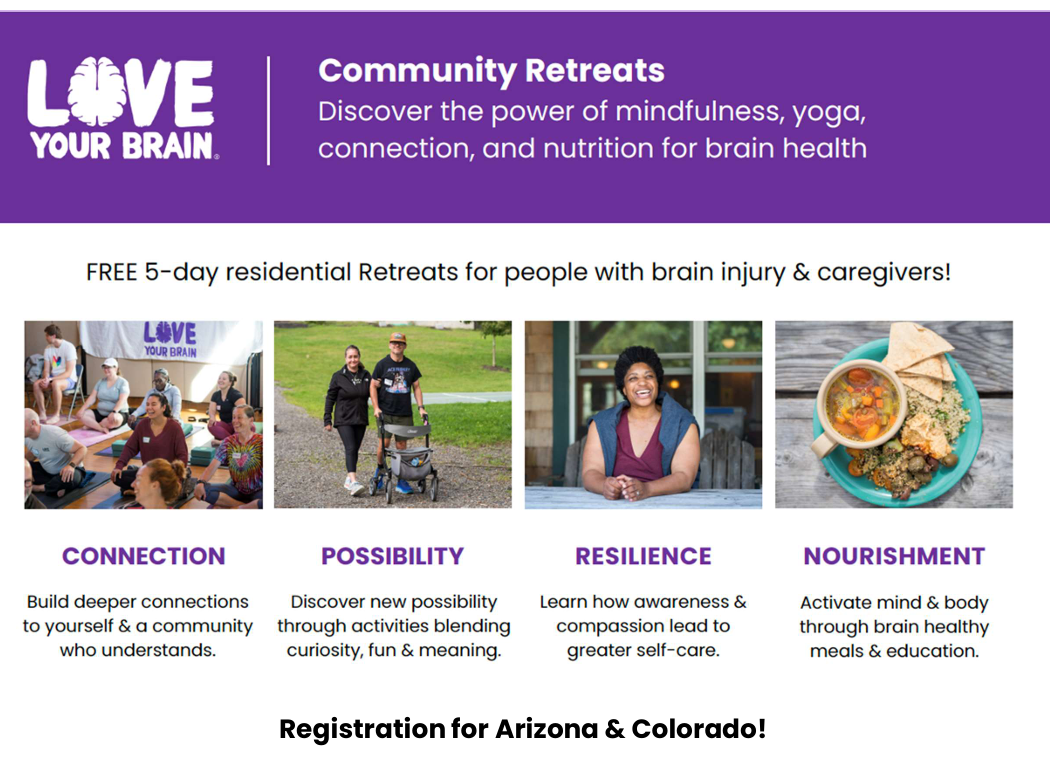
Kevin’s brother, Adam, quit his full-time job to help Kevin recover, and during this time Kevin discovered yoga, meditation and mindfulness were key missing therapies in his recovery. The brothers also realized that a supportive community was transformational in Kevin’s road to recovery. Thus, the formation of Love Your Brain, a nonprofit designed to improve the lives of TBI survivors by offering FREE resources, retreats and a supportive community.

Hearne said one of the most important lessons she has learned in the past several years is that yoga, meditation and mindfulness are great tools, but community is vital to recovery.

Another aspect of mindfulness is kindness or openness to not judging the situation critically.

“This is often in contrast to how we commonly approach life, where we're distracted or either hyper-focused on something that's already happened in the past or something that's coming up in the future instead of focusing on what's happening right now,” Hearne said.

Hearne also stressed that mindfulness isn’t a “quick fix to take away all your stress and difficulties, instead, it really is a form of mental training. And it teaches us how to more skillfully work” through challenges

Courtesy of Love Your Brain.

“What people are really craving is the community, and that is the special sauce of (Love Your Brain), and that is a crucial,” Hearne said. “Community is the crucial element of brain injury healing and navigating that space.

“Many people that are impacted by a brain injury lack the community. One of the common things I hear from participants who enroll in our programs is that they've never been able to even really meet anyone else with a brain injury. So, they just feel really isolated.”

How Love Your Brain Benefits One Survivor

And this is where Love Your Brain steps in, by providing several pathways to community with FREE retreats and mindset programs.

For more information and to register for any of Love Your Brain programs, visit www.LoveYourBrain.com

Comments Off on Rewiring Your Brain Through Mindfulness, Yoga, Meditation, and Community

Family Dynamics & Your Brain Injury

April 11th, 2025|Blog|

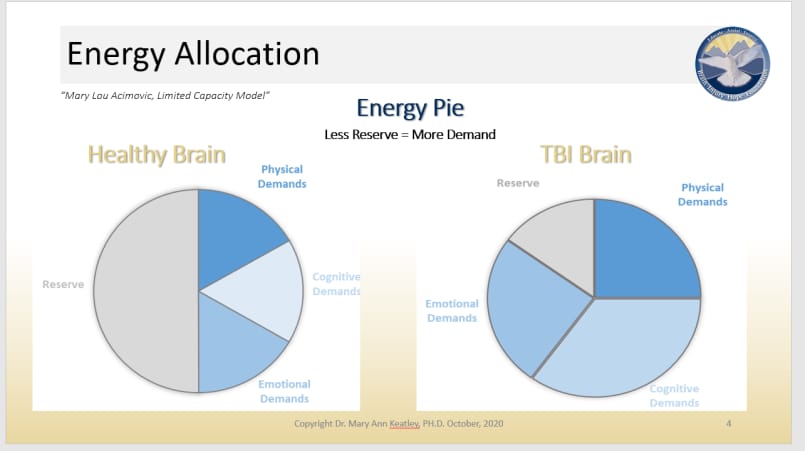
Deb Finegold uses the Energy Reserve pie chart or the “spoon theory” to explain the fatigue she experiences after a TBI.

By Eliza Marie Somers

Honest communication is a major component to a successful relationship. It is even more important if someone in your sphere has suffered […]

Comments Off on Family Dynamics & Your Brain Injury

Organizing Your Life with a Brain Injury

March 14th, 2025|Blog|

These books are highly recommended to help people organize and declutter.

By Eliza Marie Somers

Having an organized home is more than being able to find your keys or phone with ease. Studies reveal a tidy home can reduce stress, enhance creativity, improve focus […]

Comments Off on Organizing Your Life with a Brain Injury

The Aging Brain: What You Need and Want to Know

October 11th, 2024|Blog|


By Eliza Marie Somers

As we go about our daily lives, our brains are constantly aging. From ingesting toxins in our food, to inhaling small wildfire smoke particles, to grabbing a cold beer after mowing the lawn, our brains are constantly challenged – and […]

Comments Off on The Aging Brain: What You Need and Want to Know